• About
  • Essays
  • Poetry
  • Short Stories

Eamon J. Campbell

  • A New Twist on an Old Tale: Five “Retelling” Ideas for Your Next Novel

    September 21st, 2024

    Retellings are all the rage these days. Novels that put a fresh spin on a well-loved tale are not a new phenomenon, but they have turned into a publishing juggernaut in recent years, particularly in the Young Adult, New Adult, Fantasy, and Romance genres. From Madeline Miller’s Circe and The Song of Achilles to Sarah J. Maas’ A Court of Thorns and Roses and Chloe Gong’s These Violent Delights, readers have never been hungrier for books that play with timeless tales and reimagine classic characters. For those considering the industry side of things, a quick perusal of the Manuscript Wishlist website will confirm that agents and publishers share the public’s appetite for a good retelling.

    Adapting an existing story into an original novel can prove just as rewarding for writers as it is for readers. On the one hand, referring back to a source text simplifies the planning and drafting process a great deal. Knowing the broad strokes of where a story is going allows the author more time to dwell on other aspects of their book – fleshing out the characters, cultivating a lush setting, honing the dialogue to a razor point. On the other hand, adaptation opens up a world of possibilities. Sure, readers might have read The Ugly Duckling, but have they read The Ugly Duckling in space? What about The Ugly Duckling as a gritty crime noir novel? The world is your oyster!

    Having built-in reader expectations also allows writers to play with these expectations. What changes could you make to the original plot, and what would those changes say? How might the characters be reinterpreted to reflect the changing of the times? Adaptation, whether of the literary or filmic variety, implies a conversation between an author or director and his or her source text. When this conversation takes place over hundreds, or even thousands of years, it allows us to reflect on the historical past and the present moment. When it takes place across cultures, it allows us to reflect on the wider world and our own small place in it. Is adaptation easy? No. But it is the challenge that makes it so rewarding.

    For anyone considering a retelling of a classic story as their next big project, here are five ideas you might consider:
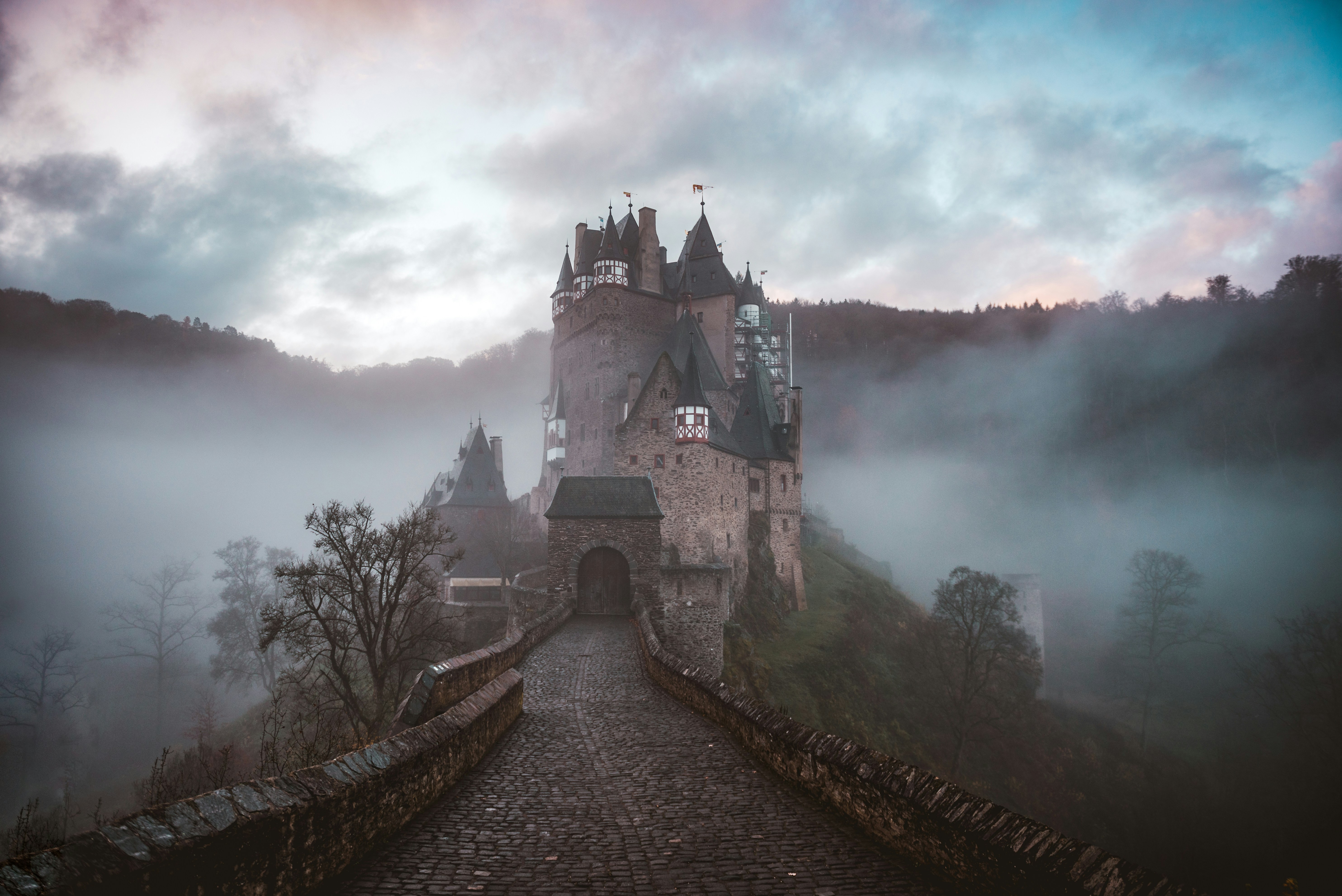
    Fairytales

    Where else to begin, but with fairytales? There is a reason Disney has returned to this particular well so many times, and made so many billions of dollars in the process. Fairytales tell simple stories with universal themes, and this lack of specificity makes them the ideal foundation for a larger, more complex novel. They also come with an inbuilt repertoire of recognizable symbols that can be called upon to provoke powerful emotions in the reader – think Cinderella’s glass slipper or Snow White’s poisoned apple. Changing the setting, perspective, or ending of a fairytale are all great ways to reinvent the original, but really, the only limit is your imagination.

    While it might seem that all of the best fairytales have been adapted within an inch of their lives, this is largely survivorship bias in action. An exploration of fairytale collections such as Giambattista Basile’s Pentamerone, Grimms’ Fairy Tales by the Brothers Grimm, and Andersen’s Fairy Tales by Hans Christian Andersen will reveal dozens of amazing stories that have hardly seen the light of day. And that’s just Europe! Across the world, there are thousands of unique folk tales just waiting to be retold and reimagined. Who knows? Maybe your next novel is out there waiting for you! Happy reading – just make sure to treat cultures other than your own with the respect they deserve, and to do your research before publishing any stories that might not be yours to tell.
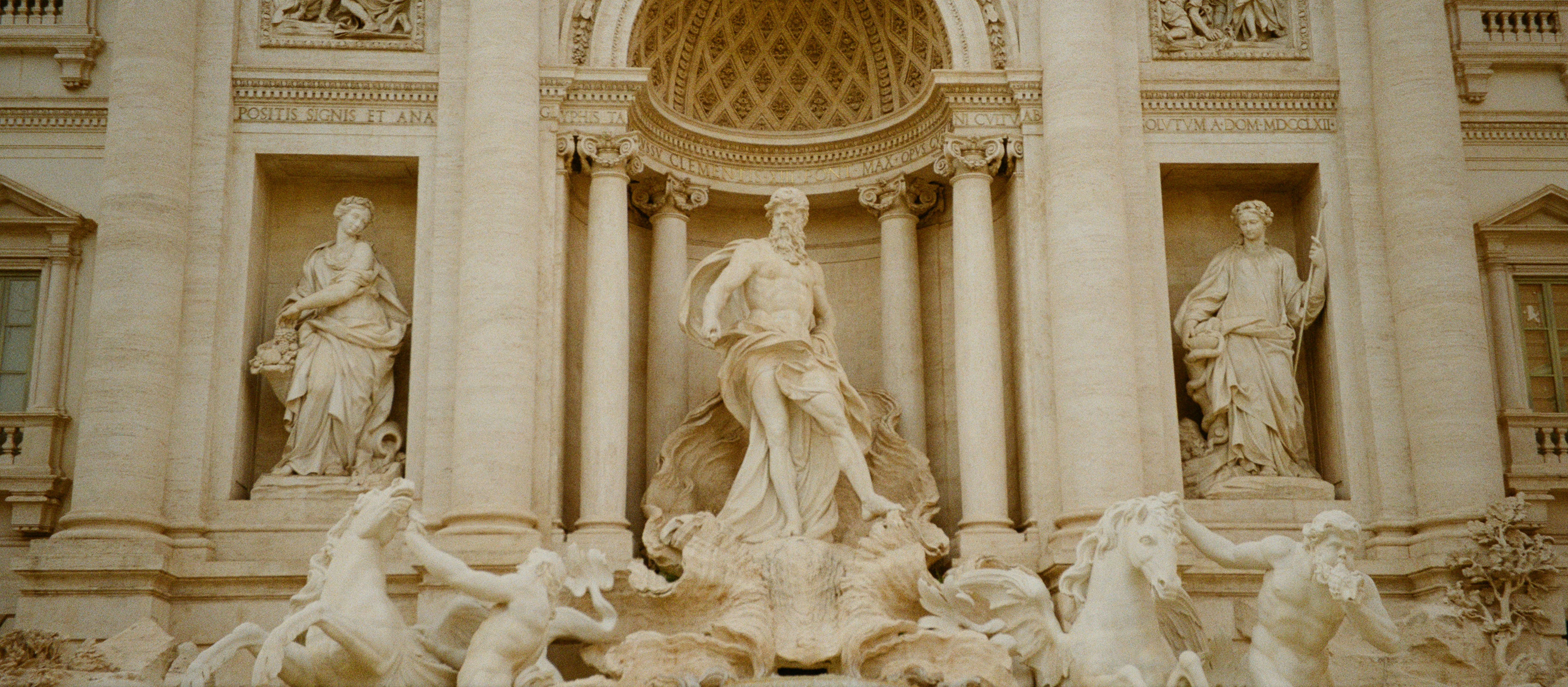
    Myths & Legends

    If fairytales are a little too whimsical for your taste, maybe you will find the story you are looking for in the annals of world mythology. Telling tales of gods, monsters, prophecies and heroes, myths and legends tend to operate on a grander scale than fairytales. These heightened stakes make for enthralling drama and earthshaking conflict. Family breakdowns and ill-fated romances are compelling enough in their own right – make the characters demigods or titans, and you’re in for a truly wild ride!

    Mythology can be a particularly valuable resource for writers of fantasy. With deities, curses, and magical beasts aplenty, myths and legends provide all the ingredients for a spellbinding new world. Greek mythology is a popular starting point for those interested in incorporating mythological traditions into their writing, but it is far from the be-all end-all. Norse, Indian, Chinese, Jewish, and many other cultures all possess their own rich mythological traditions. Have a dig around online or at your local library and see what you can find! As with fairytales, just make sure to do your research before you begin writing. Not all cultures are equally welcome to outside interpretation, and it is important to consider one’s own positioning in relation to any text one seeks to adapt.
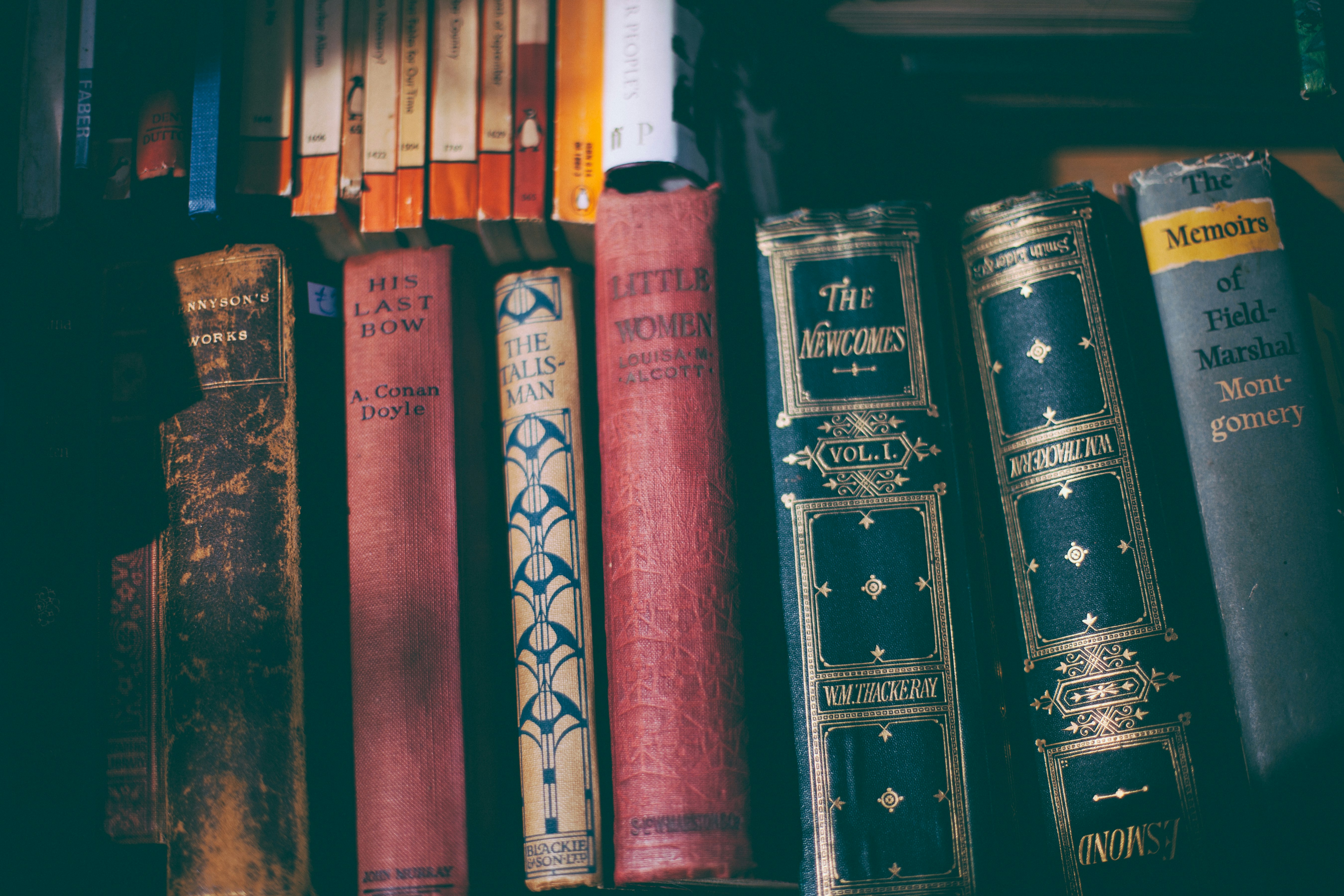
    Classic Novels

    If you are looking for a more realistic and robust narrative framework to build upon, a classic novel might be just what you need. While it might seem redundant to rewrite a novel that already exists, your retelling should bring something new and interesting to the table. You could transplant the characters and plot into a totally original setting, or you could write from the perspective of a character the original narrative neglects. You could even include the original novel as a metatextual element within your adapted story, if you’re feeling especially clever. With a little creativity, the potential for reinvention is enormous.

    Of course, you cannot use just any novel for your adaptation. If you want to publish your reinterpretation as an original work, you will need to find a source text that you have the legal right to use. The easiest way to avoid any legal pitfalls is to choose an older book that has already entered the public domain. Charles Dickens, Jane Austen, and Charlotte Bronte have all seen their fair share of reinterpretation over the years, but there are plenty of possibilities beyond these well-loved classics. An exploration of Project Gutenberg will reveal thousands of titles just begging for a fresh coat of paint – some world-famous, others obscure. Take a look, and see what inspires you!

    Poetry

    On the other end of the spectrum, we have poetry. Where novels offer detailed plots and developed characters, poems tend to prioritize cultivating a mood and conjuring up a few memorable images. Many poems do express narratives of one kind or another, but as a general rule, these narratives are not expected to meet the expectations of clarity and complexity associated with prose fiction.

    Following this line of logic, it might seem that poems are too fleeting and insubstantial to support a novel-length retelling. Yet for a writer eager to flex their creative muscles, the brevity and ambiguity of poetry can present a richly rewarding adaptational opportunity – the poem will provide the initial spark of inspiration, and you will do the rest. Whether such works technically qualify as “retellings” is an open question, but that hardly matters in the grand scheme of things. An enterprising writer should take inspiration wherever they find it, and poetry is a wellspring of inspiration unlike any other. Find a poem that leaves you hungry for more, and get writing!
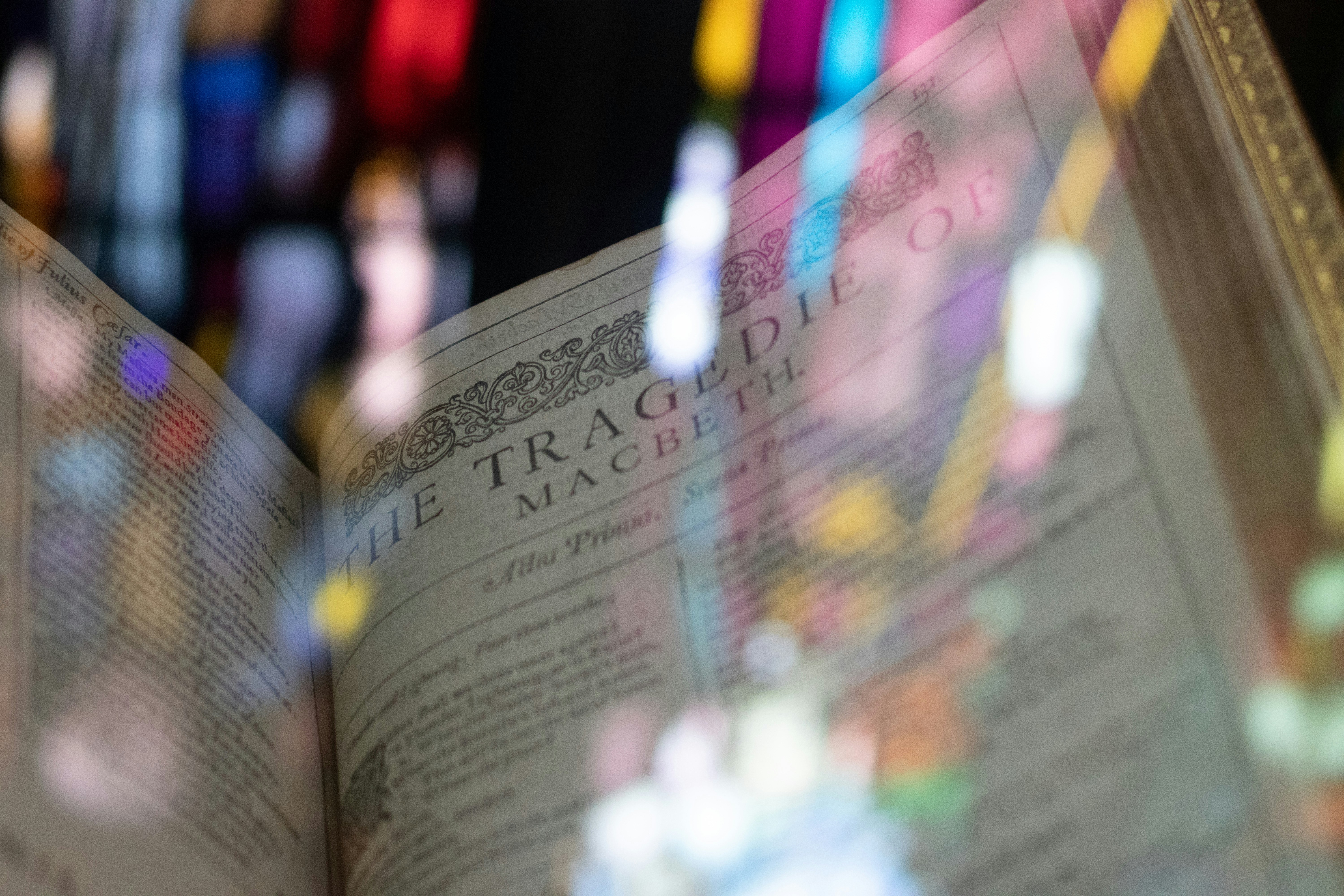
    Shakespeare

    If any one man deserves his own spot on this list, it is Shakespeare. With dozens of plays covering a range of literary genres – tragedy, comedy, history – the Bard of Avon has something for everyone. Shakespeare’s gallery of characters is iconic, and his narratives have inspired creatives beyond count. Romeo and Juliet, King Lear, and Hamlet are three of Shakespeare’s most loved (and most adapted) plays, but there are plenty of other options for those looking for something less obvious.

    While it might seem daunting to adapt a story from the most celebrated writer in all of English literature, keep in mind that Shakespeare himself was a master of reinterpretation. Drawing upon existing myths, legends, and histories, the Bard created stories that were all his own. More than four hundred years on, it is safe to say that those retellings have stood the test of time. Who’s to say your retelling won’t prove just as successful? (Fair warning: it probably won’t. But that’s okay. We can’t all be Shakespeare.)

    Be brave, and have a go. Who knows? You might just have the next Lion King or Succession on your hands.


    Well, there you go! Five ideas for stories to retell, each with their own advantages and disadvantages. Give one (or all) of these suggestions a go, and let me know what you come up with. I can’t wait to see your retelling on the shelf at my local bookstore.

  • Searching for the Secret Sauce: Another “Productive” Day

    September 18th, 2024

    Damned if you do, damned if you don’t.

    These are the words that mock me as another sun slips away outside my window. I meant to go out and do something today. I really did. I might have gone for a drive in the country, or a walk along the waterfront. I might have visited a museum, an aquarium, or an art gallery. I might have gone into town, found the quirkiest little store there, and bought myself something delightfully useless. If nothing else, I might have gone to a coffee shop, stood in line, and started up a conversation with another human being. One of flesh and bone, not paper and ink.

    Instead, I wrote. That’s what writers do, isn’t it? They commit themselves to their craft, reading and researching and plotting and planning and type, type, typing away until they hit their daily word goal. 1500 today, 2000 tomorrow… If I really knuckle down, I can have the sequel out by Christmas!

    It’s addictive, the daily grind. It reminds me of the MMOs I used to play as a child, every day, as soon as I got home from school. Games like RuneScape or DragonFable, where personal growth was as simple as clicking on things and waiting for an EXP bar to fill up. Words are my EXP now, chapters my level-ups. Each completed draft is a shiny new item in my inventory, celebrating how far I have come and how many hours I exhausted to get there. There is an undeniable appeal to that simplicity of purpose. It is nice to wake up in the morning and know exactly what you are going to do with the day.

    Over time, however, the process starts to take on an uncanny, mechanical feel. The longer I spend in the world of words, the harder it becomes to remember the world of real things whirring on around me. Like a dopamine-addled child staring at a video game, I start to forget the world beyond my window. I forget that digital gold is worthless, no matter how high you pile it. I forget that words are supposed to refer back to real things, experiences, and feelings, not just more words.

    And then the insecurities come knocking. My writing starts to feel hollow, repetitive, and trite, a series of linguistic tricks that become less impressive each time I trot them out. When the voices become too loud to ignore, I seek to plug my ears with still more words. I read old books and old newspapers, travel diaries and Wikipedia pages, fairytales and Reddit threads. I read, and I keep on reading, looking for the secret sauce that will give life to limp characters and import a little reality back into my imaginary world. Meanwhile, reality itself recedes to a high-pitched hum, perceptible only for the unplaceable disquiet its presence induces in me.

    All I wanted was to become a better writer. Yet on days like today, it feels as though that very determination is holding me back from becoming a writer worth reading.

    Sometimes, I return to the biographies of great writers past to console myself about the sad state of my own. Emily Dickinson was a shut-in, after all, and few would dare question the richness of her inner world. William Faulkner wrote As I Lay Dying in his breaks between shoveling coal – hardly the most stimulating exercise in the world. Inspiration comes from a million different places, and firsthand experience is only one tool for a writer to rely on. You don’t have to be Ernest Hemingway, or Henry David Thoreau, or Hunter S. Thompson to have a story to tell. You can just be yourself. You can just write.

    Maybe I’m being too hard on myself. Workaholism might be a personal vice, but it is also a collective symptom. Capitalism breeds it, necessitates it, and ultimately relies upon it. Even if I wanted to invest everything in a single “authentic” piece, and wait years for it to come to me, I do not have that option. “Writer” might be my hobby, my calling, even my identity, but it cannot be those things alone. It needs to be my profession. And professionals do not take days off to go wandering in the woods. Professionals go to work.

    One’s bank balance is a kind of EXP bar, too. And when you get right down to it, fancy clothes and cars are not so different from suits of pixel armor on a screen. Maybe I err in attributing all of my angst to the occupational pitfalls of writing. Maybe I would feel just as disillusioned and restless working in engineering, or medicine, or finance. Maybe. Probably, even. But that doesn’t make me feel better. Writing was supposed to be my ticket out of the soul-destroying rat race, not an on-ramp to another, slower, sadder lane.

    A different, darker kind of consolation lies in the anti-Dickinsons of the world. In those glitzy travel bloggers and influencers who travel the world, living out dream holiday after dream holiday with no higher purpose than the production of profitable “content.” Is a spectacular life lived in service of spectacle any more meaningful than a life spent squirreled away in books? Is a sponsored blog post about a tropical resort any more grounded than a fantasy story of a fairytale kingdom?

    Maybe I should content myself with the written world, and the myriad modes of expression contained therein. After all, there’s still so much I haven’t read. If I accrue a little more knowledge, memorize a few more words, consume a few more classics, I might just find what I’ve been looking for. I might just cough up something worthwhile.

    Yet still I have my doubts. Sometimes, I fear that we’re all just kidding ourselves. The adventurers, and the investigators, and the pots-and-pans researchers. We’re all fumbling around for that secret sauce that turns text into truth. But in the end, there is no secret sauce. There are only words, constituted and reconstituted in a billion different ways, forming and reforming ever more elaborate facades of originality and authenticity. Castles of sand, imitating castles of stone.

    Time for bed now, I think. I’ll feel better in the morning.

  • Making Sense of the “Mirror World”: Naomi Klein’s Doppelganger

    September 16th, 2024

    In her 2023 release Doppelganger, Shock Doctrine author Naomi Klein undertakes a sweeping analysis of Western society through the era and aftermath of the Covid-19 pandemic. As its title suggests, Doppelganger utilizes the psychological and literary concept of the “other self” and, by extension, the “mirror world,” to draw together threads as ostensibly disparate as vaccine skepticism, online self-marketing, antisemitism, and environmental collapse. The doppelganger motif is undoubtedly the defining characteristic of the book, and the extent to which Klein’s critique coheres will inevitably depend on the reader’s judgment of its value as a framing device.

    The genesis of Doppelganger, according to Klein, lay in her bizarre experience of being repeatedly, publicly, and confidently mistaken for another famous Naomi – rockstar feminist turned alt-right aunt Naomi Wolf. Klein uses this experience of conflation, and the strange spectacle of Wolf’s downward spiral, as her entry point into a world of “mirror politics” characterized by paranoia and projection. At the same time, she ponders the boundaries of the “authentic” self and “inauthentic” double, in a time when authenticity has become a marketable commodity and life itself a kind of open-ended resume.

    Klein is at her clearest and most convincing when swimming in these waters. The section of the book discussing personal branding online draws weight from Klein’s reflections upon her career, as well as her unwanted entanglement with Wolf. Wolf’s story combines similarly well with Klein’s exploration of the larger alt-right ecosystem in which she participates. Through Wolf, we get a glimpse into both the functioning of the “mirror world” – how it takes real issues, inverts them, and dials them up to a hundred – and of the appeal this alternative sphere presents to the disenchanted denizens of our “real world.”

    As the book progresses, the forms of “doppelganging” Klein cites become somewhat more abstract, metaphorical, and at times, tenuous. Beginning with clear instances of identity obfuscation and reality mirroring, her focus shifts outwards to a dissection of the larger forces that shape our societies for the worse. There is nothing objectionable in these later sections – they remain insightful, well-researched, and at times, moving. However, the doppelganger motif begins to feel less helpful as the pages go by, recurring more out of commitment than ongoing analytical benefit.

    It is not inaccurate to describe, for instance, the historical othering of imperial subjects as a kind of mirroring. However, this conceptualization does not feel wholly necessary, nor does it connect back to the other forms of “doppelganging” Klein identifies in the way her placement of them together implies. When discussing the state of online politics in the 2020s, Klein’s doppelganger analysis seeks to name something quite unique and uncanny in our present historical moment. When she tries to extend the concept back hundreds of years, she undercuts this specificity, and begins to relabel ideas that are already well understood in other terms. Indeed, the late introduction of “shadowlands” as a concept comes almost as a concession that Klein’s “doppelganger” theory has outlived its usefulness.

    On the one hand, I wonder whether a tighter focus might have allowed the book’s sharper insights more room to breathe. On the other, I recognize that such a narrowing would certainly have undermined the activist ambitions of the book. If this was a sacrifice Klein was unwilling to make, I can hardly fault her. The issues she arrives at towards the end of the book are weighty, consequential, even existential. Perhaps Klein calculated that a little messiness was a fair trade for the chance to get everything off her chest.

    One feature that may test the durability of Klein’s book is its preoccupation with the Covid-19 pandemic. Doppelganger is a “Covid book,” and not just because it devotes so much focus to the societal impact of the pandemic. The book is highly personal and reflective, weaving together Klein’s own pandemic anecdotes with her larger social observations to provide a top-to-bottom stocktaking of the Covid era – how it changed us as individuals and how it changed the culture we all inhabit. Even in form, the book embodies the lockdown experience of so many, flitting between periods of intense self-reflection, distraction through media, and descent into online rabbit holes.

    At times, this works to the book’s advantage. Klein’s focus on the pandemic provides some much-needed connective tissue between the diverse topics she discusses, and allows her to intersperse her own story without these digressions feeling self-indulgent. Yet at other times, it feels as though Klein places undue emphasis on the pandemic as a pivot point for social upheaval. Covid-19 did drive many ostensibly reasonable public figures off the deep end, but so did, for example, the 2016 US election before it, and the ongoing moral panic around trans people after. Covid-19 did facilitate a shocking upward transfer of wealth, but that train was also well and truly on the tracks. When we were in the throes of those early years – 2020, 2021, even 2022 – the pandemic really did feel like a once-in-a-generation, paradigm-shifting event. A few years on, however, it has begun to look more like another, albeit rather large and ugly, domino.

    Notwithstanding these reservations, Doppelganger remains an engaging, informative, and often compelling work. For every minor complaint one might raise regarding the book, there is just as much to recommend it. Klein’s authorial voice is defined and persuasive throughout, delivering pathos when appropriate and humor when needed. The book’s invocation of literary and filmic doppelgangers prevents it from becoming dour or dry, despite its sobering subject matter. Even the Klein-Wolf confusion, which appears farcical on the surface, leads the reader to some unexpected and occasionally uncomfortable places. That Klein is able to take on such wide-ranging material and more or less stick the landing speaks to her prodigious skill as a researcher and writer. For anyone eager to explore the absurdities of our post-Covid world, and willing to go for a few rides along the way, I would strongly advise giving Doppelganger a read.


Loading Comments...
 

    • Subscribe Subscribed
      • Eamon J. Campbell
      • Already have a WordPress.com account? Log in now.
      • Eamon J. Campbell
      • Subscribe Subscribed
      • Sign up
      • Log in
      • Report this content
      • View site in Reader
      • Manage subscriptions
      • Collapse this bar